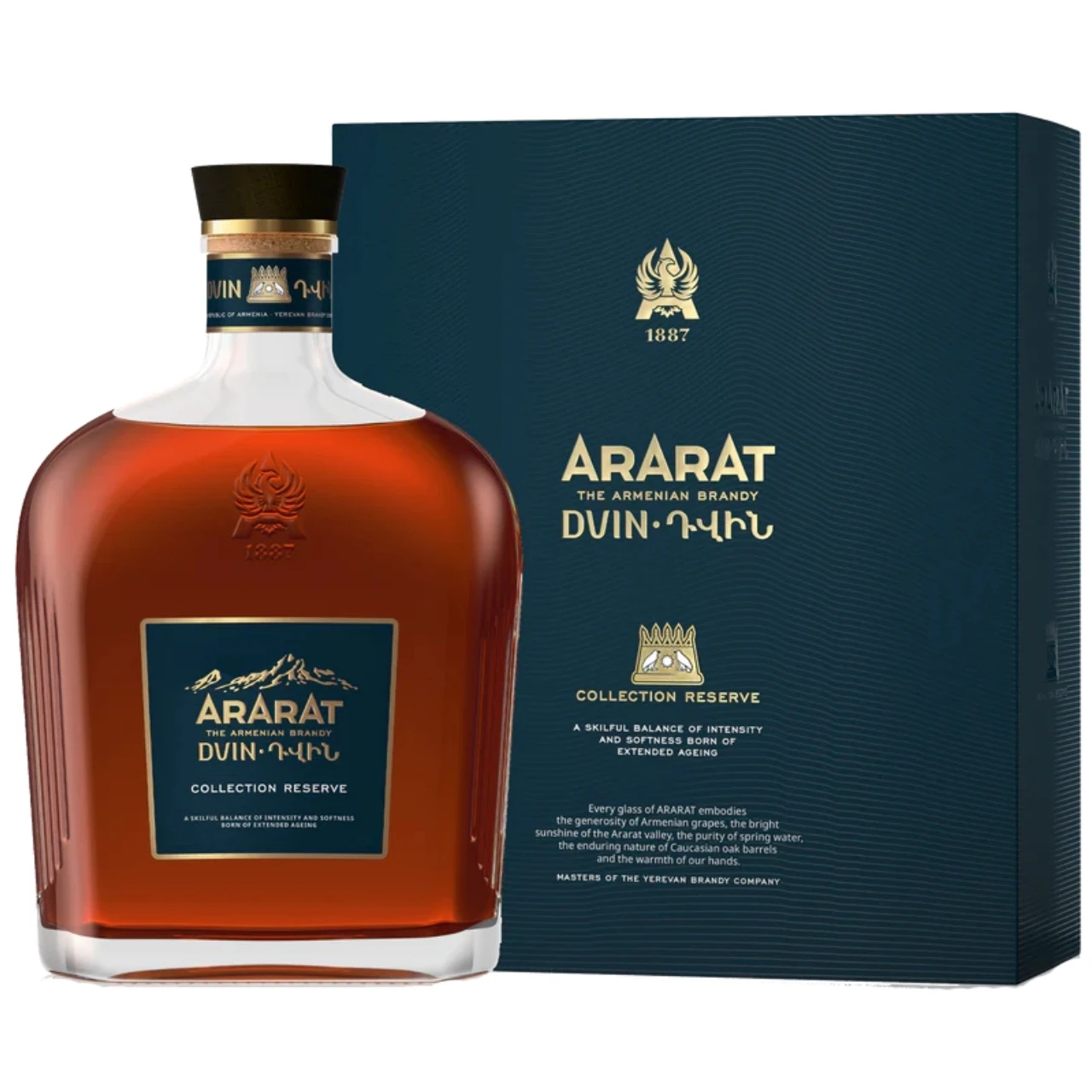
#214 When Cognac is not Cognac: How ARARAT adapts across borders

Walk into any store in Armenia or many countries of the former Soviet Union and ask for Armenian cognac. Everyone knows what you mean. ARARAT has been known as Armenian “коньяк” (Russian Translation of cognac) for generations.
Now take the same bottle to Western Europe and things become more complicated. The Yerevan-based Brandy Company has been producing Armenian brandy since the nineteenth century. Its product line includes a wide range of ARARAT drinks with different aging periods. The younger varieties start at around three years of aging, traditionally shown by stars, followed by 5-year, 7-year, 10-year and several premium variations. At the other end of the range are rare and collectible brandies aged for several decades, including 50 years and more. So, ARARAT is not just one bottle, it is a family of products ranging from relatively affordable everyday brandy to very expensive aged expressions.
In 1998, French drinks giant Pernod Ricard acquired the company for around $30 million. This created an interesting situation: a French company now owned one of the best-known producers of something millions of consumers called “Armenian Cognac.” There was just one problem: Cognac is not simply a type of drink in international trade. It is a protected geographical name connected to the Cognac region of France. Armenian brandy may be produced using similar traditions, but it is not produced in Cognac. In markets where the geographical indication is protected, it therefore cannot simply be marketed as French Cognac. Pernod Ricard faced a classic international business problem. Should it insist on one global name everywhere, or adapt to different markets? The answer has largely been adaptation. In international markets, ARARAT is presented as Armenian Brandy. But in parts of the former Soviet market, where the word “коньяк” has historically been used much more broadly and has strong meaning for consumers, ARARAT has continued to be marketed as Armenian “коньяк” where local rules allow it. The bottle may be essentially the same. The ARARAT name is the same. The Armenian origin is the same. But the category written on the product can change when it crosses a border.
This is a simple example of why product adaptation does not always mean changing the product itself. Sometimes the whiskey does not need a different taste, the chocolate does not need a different recipe, and the car does not need a different engine. What needs to change may simply be the name, label, packaging, or positioning. And sometimes companies do not adapt because consumers want them to. They adapt because the legal environment gives them no choice.
That is international business: the same product can cross a border, but the rules and meanings surrounding it do not necessarily cross with it.
This case was written by Agassy Manoukian, American University of Armenia