#212 AI makes Starbucks forgetful in Korea

There are many ways for companies to fail. Some fail because they become arrogant. Others fail because they become complacent. Some fail because they obsess over efficiency while neglecting innovation. But occasionally, a company commits a much rarer and more devastating sin: it simply forgets where it is.
That is precisely what happened to Starbucks Korea. For decades, Starbucks represented something extraordinary in South Korea. It was not merely a coffee chain. It was a social institution. Starbucks gift cards became the universal currency of social etiquette. Seasonal tumblers triggered nationwide buying frenzies. A Starbucks cup signaled sophistication, urbanity, and participation in modern Korean culture. By many measures, South Korea became Starbucks’ most important market outside the United States.
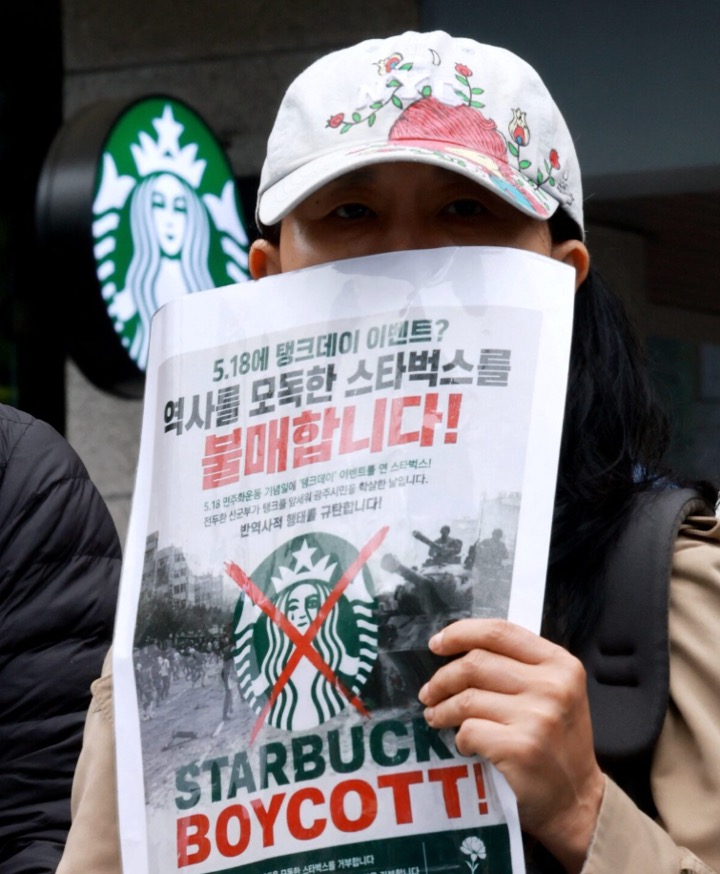
Then, in May 2025, all of that began to unravel. The immediate trigger was a marketing campaign called “Tank Day,” launched on May 18 – a date that carries profound historical significance in South Korea. For Koreans, May 18 commemorates the Gwangju Democratization Movement of 1980, during which hundreds of civilians were killed when the military dictatorship of Chun Doo-hwan deployed troops and armored vehicles against pro-democracy protesters. The campaign’s use of the word “tank,” combined with other historically loaded references, was interpreted by many Koreans not as an unfortunate mistake, but as a grotesque mockery of one of the country’s deepest collective traumas.
The public reaction was immediate and ferocious. Customers destroyed Starbucks merchandise on social media. Boycott movements spread nationwide. Civic organizations filed legal complaints. Police opened investigations. The company’s market value deteriorated, customer activity collapsed, and even Starbucks headquarters in Seattle reportedly faced contractual considerations regarding the future of the Korean operation.
But focusing exclusively on the marketing blunder itself misses the deeper lesson. The real failure was organizational.
When Starbucks Korea conducted its internal investigation, the findings were breathtaking in their banality. The campaign had reportedly been developed partly with the assistance of generative AI. Employees claimed they were unaware of the historical significance of May 18. The campaign bypassed standard legal review procedures. It had even passed through four layers of management approval. Some executives reportedly approved the campaign without even opening the attached materials.
In other words, nobody remembered. Nobody cared. Management scholars have long warned that organizations suffer from what James March and Johan Olsen famously termed “organizational forgetting” – the gradual erosion of institutional memory that accompanies growth, turnover, and excessive reliance on formal processes. More recently, scholars of organizational resilience have argued that institutional memory represents a critical strategic asset rather than merely an archival function. When organizations lose the ability to remember, they lose the ability to recognize danger.
This problem is becoming more severe in the age of artificial intelligence. AI systems excel at pattern recognition, optimization, and content generation. What they do not possess is cultural memory, historical consciousness, or moral judgment. Those responsibilities remain firmly human. Yet many organizations increasingly deploy AI-supported decision-making processes while simultaneously reducing the very forms of institutional oversight that provide historical and cultural context.
The result is what happened at Starbucks Korea: algorithmic competence combined with cultural illiteracy. What makes this case particularly fascinating is that there is little evidence that anyone intended to cause harm. This was not a case of malice. It was something arguably more dangerous: systemic ignorance. An entire organizational system had become so optimized for speed, efficiency, and process that it had effectively amputated its own memory functions without realizing it.
This points to an uncomfortable truth for executives. Most organizations treat institutional memory as a cost center. Veteran employees retire, historical training disappears, compliance functions become box-checking exercises, approval processes become rituals rather than safeguards. As a result, cultural expertise is outsourced, diluted, or simply ignored. Until one day, the organization discovers that the people responsible for remembering have all left the building.
The Starbucks Korea crisis therefore should not be understood as a story about coffee, marketing, or even South Korea. It is a story about leadership failure. More specifically, it is a story about the deadly sin of forgetfulness. Brands are not merely collections of products, logos, and marketing campaigns. They are contracts of trust embedded within particular societies and historical contexts.
And when nobody in the organization remembers what must never be forgotten, eventually customers will remind them.