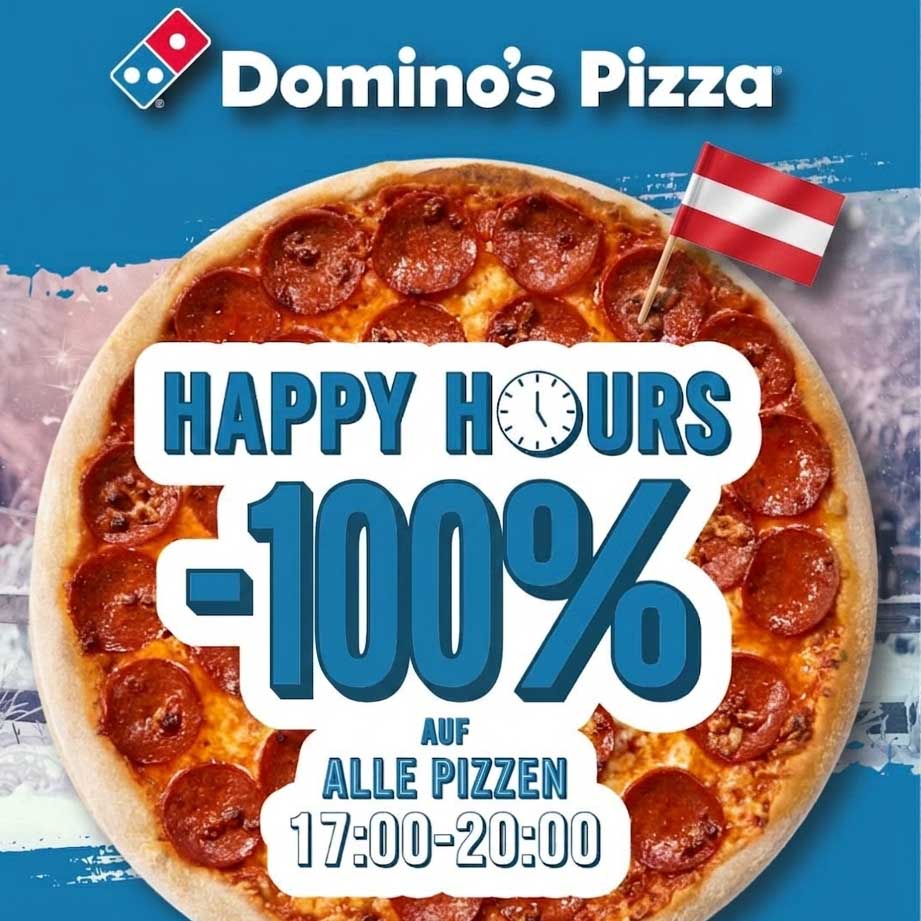
#209 The dough didn’t rise: Domino’s exit from Austria

In November 2017, Domino’s Pizza arrived in Austria with considerable fanfare. The American pizza giant, already operating thousands of stores across more than 80 countries, opened its first Austrian outlet in Vienna’s Floridsdorf district. Executives spoke enthusiastically about bringing Domino’s renowned delivery expertise, digital ordering systems, and “pizza theater” concept to Austrian consumers. The company appeared confident that its proven international formula would quickly find acceptance in yet another European market.
Less than a decade later, the experiment is over. In 2025, Domino’s announced its withdrawal from Austria, bringing an abrupt end to a market entry effort that once seemed full of promise. Austrian customers found themselves ordering their last Domino’s pizza as stores prepared to close their doors permanently. While the official explanations focused on strategic considerations, the departure raises a more interesting international business question: How does one of the world’s most successful restaurant chains fail in a relatively affluent and stable market? The answer may lie in a mistake that multinational companies make repeatedly: assuming that a business model successful in dozens of countries will automatically succeed in the next one.
To understand the challenge, one must first understand Austria’s pizza market. Unlike many other countries, Austria already possessed a mature food-service sector. Pizza has been a staple for Austrians for decades and independent pizzerias are ubiquitous. Consumers are accustomed to affordable high-quality pizza, often produced by family-owned businesses with deep roots in local communities. Go to any city in Austria, and customers can choose from countless neighborhood establishments offering everything from traditional Italian recipes to local adaptations (think pizza with bacon and fried egg…!). This created a difficult positioning problem. Domino’s was neither the cheapest option nor necessarily the highest-quality option. The company entered the market with its standardized global menu, strong delivery capabilities, and technology-driven ordering experience. Yet Austrian consumers were already well served by local operators who often offered comparable delivery times and products that many customers perceived as more authentic.
The challenge was compounded by Austria’s relatively small population. With fewer than ten million inhabitants, Austria lacks the scale advantages available in larger European markets such as Germany, France, or the United Kingdom. A franchise system that depends on significant store density and logistics efficiencies can easily struggle when the potential customer base is limited. Every new outlet must generate sufficient demand not only to cover its own costs but also to justify investments in marketing, supply chains, management infrastructure, and franchise support.
Changing consumer behavior also likely played a role. The rapid growth of delivery platforms such as Lieferando and Foodora fundamentally altered the competitive landscape. Local restaurants that previously lacked sophisticated delivery capabilities suddenly gained access to the same digital channels that had once provided chains like Domino’s with a competitive advantage. When customers can order from hundreds of restaurants through a single app, brand recognition alone becomes less valuable.
There is another possible explanation. Domino’s has historically succeeded by emphasizing consistency, convenience, and delivery speed. Those strengths resonate strongly in markets where pizza is often viewed as a quick-service product. In Austria, however, many consumers approach pizza differently. Authenticity, ingredient quality, and local reputation frequently matter as much as convenience. The attributes that made Domino’s successful elsewhere may simply not have aligned perfectly with Austrian consumer expectations.
Ironically, Domino’s is hardly the first company to discover that success in one market does not guarantee success in another. International business history is filled with examples of firms that underestimated local competition, misunderstood consumer preferences, or overestimated the transferability of their business models. Some of the world’s largest retailers, restaurant chains, and consumer brands have learned this lesson the hard way.
Domino’s departure from Austria represents more than just the closure of a pizza chain. It serves as a reminder that international expansion is not merely a process of replication. Markets are not blank canvases waiting for a successful foreign concept to arrive. They are complex ecosystems with established competitors, cultural preferences, customer habits, and economic realities. The deadly sin is not expansion itself. The deadly sin is believing that a winning formula is universally applicable.