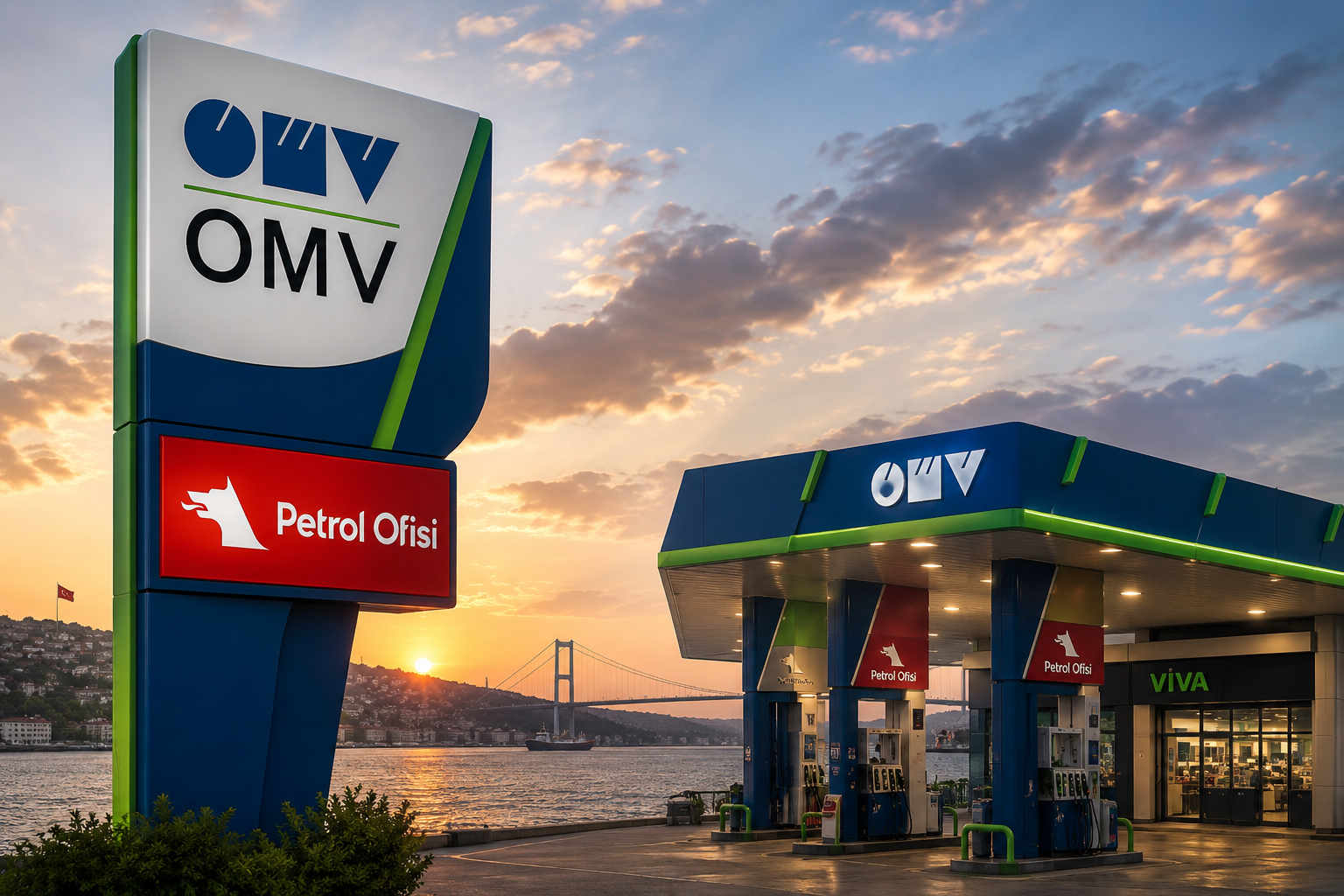
#207 OMV’s Turkish Pipe Dream

It looked perfect on a map. A bridge between Europe and the Middle East. A fast-growing economy. Rising energy demand. Strategic pipelines. Political relevance. For Austrian oil company OMV, Turkey was not just another market. It was supposed to be a hub.
By the late 2000s, OMV had a clear strategic ambition: build a dominant integrated energy position across Central and Eastern Europe. Austria was the core. Romania, via Petrom, became the second pillar. Turkey? Supposed to be third.
Through its acquisition of Petrol Ofisi, ultimately reaching nearly full ownership, OMV secured access to one of the largest fuel distribution networks in the country, with thousands of stations and significant downstream presence. The logic was textbook: Enter a high-growth market, acquire a market leader, integrate upstream, midstream, and downstream operations, capture value across the chain. On paper, it was flawless.
There was just one problem: The integration never really happened. As OMV later admitted, the original plan to embed Petrol Ofisi into its broader value chain “could not be realized.” That single sentence – buried in a divestment announcement – tells you everything. Because in energy markets, scale alone is insufficient. The real value comes from integration: Refining linked to distribution, aligning supply with retail, pricing optimized across the chain. Without these, you don’t have a system. You have a collection of assets.
There was also the fact that Turkey was not just a market, but it was a regulated system. Fuel price caps imposed by authorities constrained margins and distorted competitive dynamics. What looked like a high-growth opportunity from Vienna became, on the ground, a tightly controlled environment where pricing power – the lifeblood of downstream operations – was limited. This is where many foreign entrants miscalculate: They analyze market size, but they underestimate market structure.
And then there was the environment: Political volatility, currency fluctuations, regional instability, supply uncertainties tied to broader Middle Eastern dynamics. Even OMV’s own leadership later described the divestment process as “very challenging because of the political and economic situation.” In other words: the macro context was not noise, it was the story.
As a result, OMV sold Petrol Ofisi for approximately €1.37 billion in 2017. The company also recorded impairments linked to the transaction – an explicit acknowledgment that expectations and reality had diverged. Officially, the narrative was strategic focus. Unofficially, it was course correction. Because when a “core pillar” becomes a “non-core asset,” something fundamental has shifted.
OMV’s move into Turkey was not irrational. It was, in fact, highly logical – if you think in terms of geography. But international business punishes one specific mistake: Confusing strategic adjacency with strategic fit. Turkey was close, it was important, it was promising, but it was not necessarily compatible with OMV’s operating model.
OMV did not fail because it entered Turkey. It faltered because it assumed that geographic relevance automatically translates into strategic viability. In international business terms, this is the deadly sin of mistaking proximity for compatibility. The map is not the strategy.